








By Scott Patchan
- Grid modernization projects are driving a shift to non-metallic conduit
- Fiberglass RTRC outperforms PVC and other non-metallic options in utility applications
- Champion Duct® delivers real-world results in the field
The U.S. electrical grid is undergoing its most significant transformation in decades. Aging infrastructure is being replaced or hardened, renewable energy sources are being interconnected at scale, and underground distribution networks are expanding to improve resilience. At the center of it all, engineers and contractors are asking: What conduit is right for this job?
Why the Grid Modernization Push Is Changing Conduit Specifications
The U.S. power grid delivers electricity across seven million miles of transmission and distribution lines, and significant portions of that infrastructure are decades past their expected service life. Utility-scale grid modernization projects from buried distribution upgrades to new substation feeders continue to move from planning to active construction across the country.
These projects share a common set of demands: long service life, corrosion resistance, dielectric properties, and cost-effective installation at scale.
A Quick Look at Non-Metallic Conduit Options
Here’s how the primary non-metallic conduit options compare in utility applications:
Fiberglass / RTRC (Reinforced Thermosetting Resin Conduit)
- The highest-performing non-metallic option for utility-grade applications.
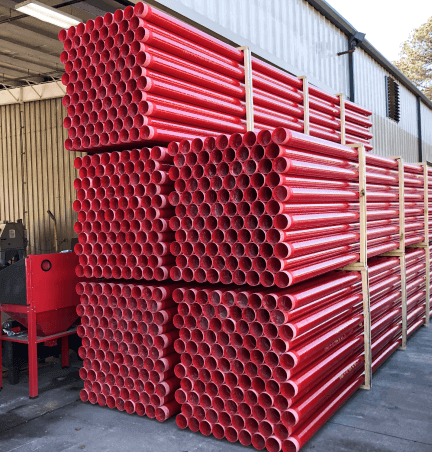
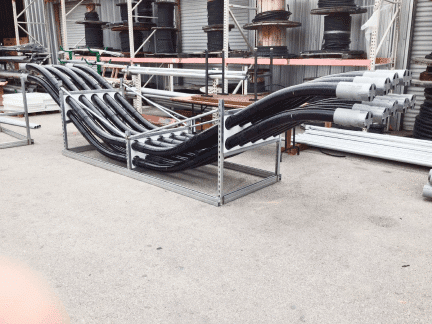
- Listed under NEC Article 355, fiberglass conduit combines high mechanical strength, corrosion resistance, electrical non-conductivity, and a low coefficient of friction.
PVC Schedule 40 / Schedule 80
- Cost-effective and widely available.
- A common choice for lower-voltage, direct-burial applications.
- However, PVC has temperature limitations, is prone to burn-through, and can become brittle over time in certain environments.
HDPE (High-Density Polyethylene)
- Flexible and well-suited for directional drilling and trenchless installations.
- However, HDPE’s flexibility can be a limitation in rigid duct bank configurations, and it has a higher coefficient of friction than fiberglass, which can complicate long cable pulls.
The Unique Challenges of Grid Modernization Projects
Utility grid modernization projects come with distinct challenges that expose the limitations of standard conduit materials.
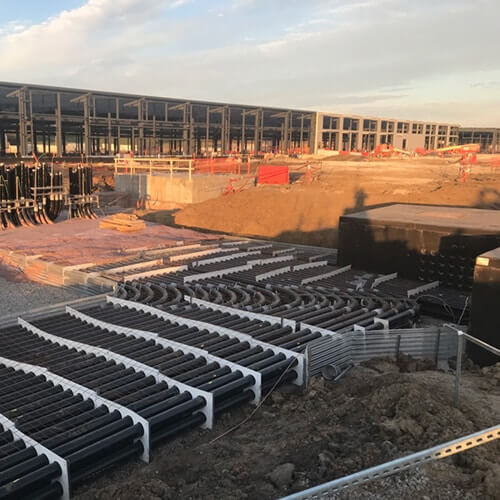
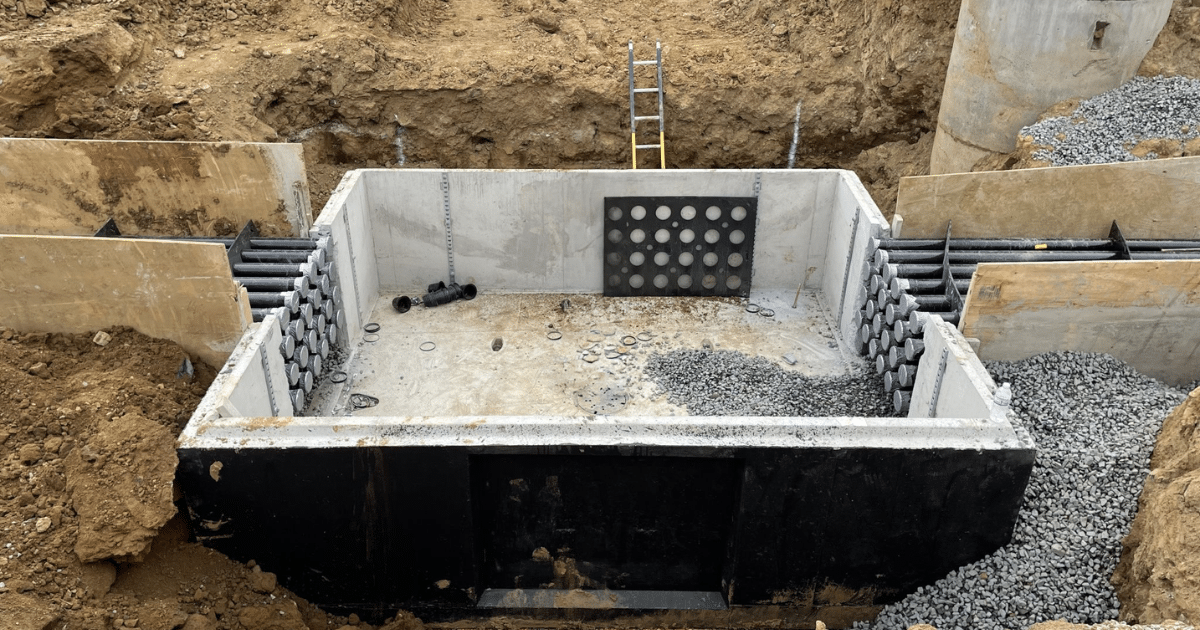
- Cable pull distances. Modern duct bank configurations often run hundreds of feet between pull points. Friction is the enemy. When a power plant project switched from SCH80 PVC to fiberglass RTRC conduit, the distance between concrete vaults extended from every 250 feet to every 750 feet as a direct result of fiberglass’s extremely low coefficient of friction.
- Corrosive underground environments. Buried conduit is exposed to soil chemistry, groundwater, and in many regions, saltwater intrusion or industrial contamination. Steel and aluminum corrode. PVC can degrade over decades under certain chemical exposures, whereas fiberglass is unaffected and resists degradation from soil chemicals and moisture.
- High-voltage transmission applications. Grid modernization often involves running higher-voltage circuits underground. Champion Fiberglass RTRC conduit has a material dielectric strength of 550 volts/mil and with XW wall thickness of 0.25″, it can protect transmission lines up to 125 kV or more. This makes it appropriate across a wider voltage spectrum than most non-metallic alternatives.
- Fault conditions. In a fault event, metallic conduit can melt and weld wire to the inside of the conduit. Fiberglass conduit does not. This is a critical safety advantage in utility environments, particularly at substations and interconnection points where fault risks are real.
- Project economics and labor costs. Fiberglass conduit is significantly lighter than galvanized rigid steel, reducing handling time and physical labor in the field. Slip-fit and interference-fit connections are straightforward and fast. On large-scale duct bank deployment, these installation efficiencies add up quickly.
Fiberglass in Action
Utility-Scale Solar Interconnection
The Skipjack Solar Center in Charles City, Virginia required five 35 kV circuits running through 3.2 miles of corridor to a new substation, where voltage stepped up to 230 kV for grid connection. Trenches ranged from 60 to 80 feet in depth. Champion’s triple seal gasket connection provided no burn-through risks. For solar interconnection projects where cable volumes are high and runs are long, fiberglass consistently outperforms alternatives.
→ Read the complete Skipjack Solar Center Case Study
Extreme Elevation and Temperature
The utility infrastructure at Wasatch Peaks Ranch required miles of underground conduit installed across single-lane mountain roadways, complex vaults housing 70+ elbows, and bridge crossings. Champion Duct’s lightweight construction reduced equipment and manpower needs on the mountain, and its low coefficient of friction eliminated lubricant-related damage risks on long pulls.
→ Read the complete Wasatch Peaks Ranch Case Study
Why Choose Champion Fiberglass
Champion Fiberglass UL-listed, NEC Article 355 compliant, and BABA compliant fiberglass conduit systems are engineered to meet the demands of utility and duct bank installations.
Key advantages that utility engineers and contractors specify Champion Duct for:
- Low coefficient of friction
- Corrosion and chemical resistance
- High dielectric strength
- No burn-through elbows
- Lightweight
- BABA compliance
- BIM/Revit models available
Ready to Specify Champion Duct™?
Visit Champion Duct to download the Champion Duct Product Catalog, NECA Labor Rates, and related technical information.
For project-specific support and product selection guidance, find a Champion Fiberglass representative in your region.